
Sunday June 2, 2019 – HUBBARD GLACIER
Today we did not get off the ship. Instead we spent the day sailing very close to Hubbard Glacier which is one of only a few advancing glaciers in Alaska. The rest of the glaciers are receding which means they are melting faster than their forward momentum. We witnessed some small calving events however the calving season will not be at its best until July and August when the ambient temperature is much warmer.

The night before arriving at the Hubbard Glacier we attended a lecture by Dr. Kent Syverson on glaciers. He did his PhD on glacial geology (perfect). This helped prepare us for spending the day viewing Hubbard Glacier, and all the other glaciers we will be seeing on this cruise. So we now can identify different glaciers types and how glaciers carved the geological structures of the land. As a matter of fact JY says she could have taken one or more of his geology classes in college. He is not only brilliant, but approachable and funny. He and the other scientist on board give on-going lectures throughout the cruise. One night Dr. Syverson gave a lecture on how chemistry and temperature affect the development and sustainability of the Alaskan temperate rainforest along the coast of the Alaskan panhandle. Dr. Syverson surprising used the periodic table in his lecture and neither one of us had seen a periodic table since our college days. The lecture was informative and painless. We try to attend as many presentations as possible.
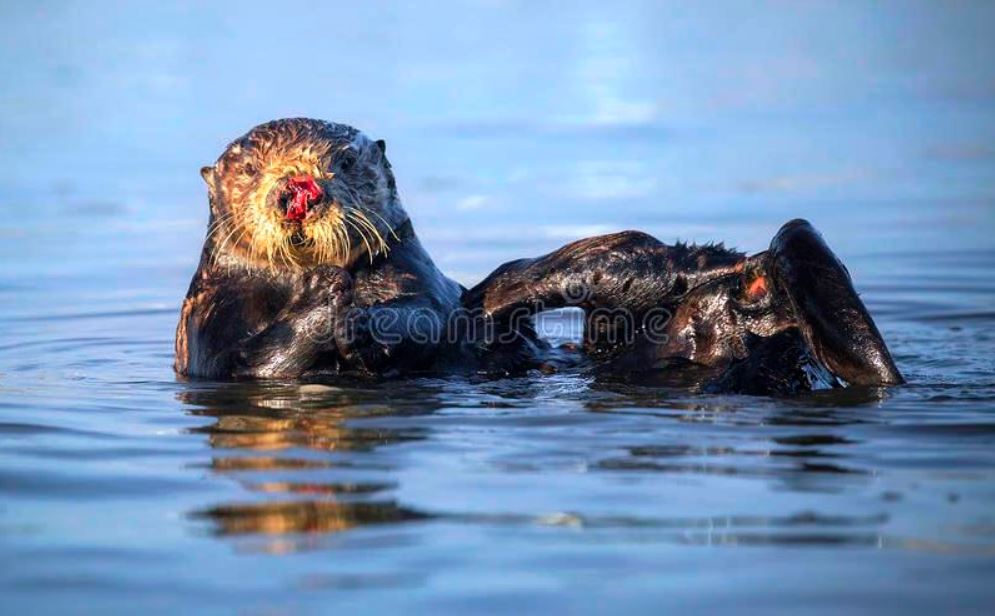
We saw several female Harbor Seals and their pups resting on medium size icebergs as we sailed by. We are starting to see sea otters more frequently. The onboard naturalist gives talks on the flora and fauna and said that before the Russians nearly wiped out the sea otter population for their fur the otters were much bigger. They look cute and cuddly but are actually very mean and vicious. Even in the mating season the males are vicious with the females. The courting process is not romantic at all. During sex the male will grab a hold of the female generally by the nose or ear and won’t let go until the mating process is complete. The naturalist showed a photo of couples (otters) mating and some females had parts of their noses missing. That’s rough sex!
Monday June 3, 2019 – VALDEZ
Today we docked at Valdez which is a very small town of 4,000 people who mainly work at the Alaska pipeline terminal on the opposite shore of Prince William Sound. The Valdez where we docked has been relocated and rebuilt after the original town was completely wiped off the map in the aftermath of the 1964 Good Friday Earthquake and Tsunami.

The earthquake was 9.2 on the Richter scale, one of the largest earthquake ever recorded in the world. After the quake destroyed the town of Valdez the 35 feet high Tsunami that followed wiped out whatever was left. The town was completely flattened, so the residents rebuilt Valdez in another location not too far away. The new location was built next to a peninsula of land they hoped would buffer future Tsunamis.
Then another disaster occurred in Prince William Sound – the infamous Exxon Valdez Oil Spill. As you can imagine this disaster affected the wildlife and many marine species have still not recovered. We attended an informative presentation by Dr. Syverson about the disaster.
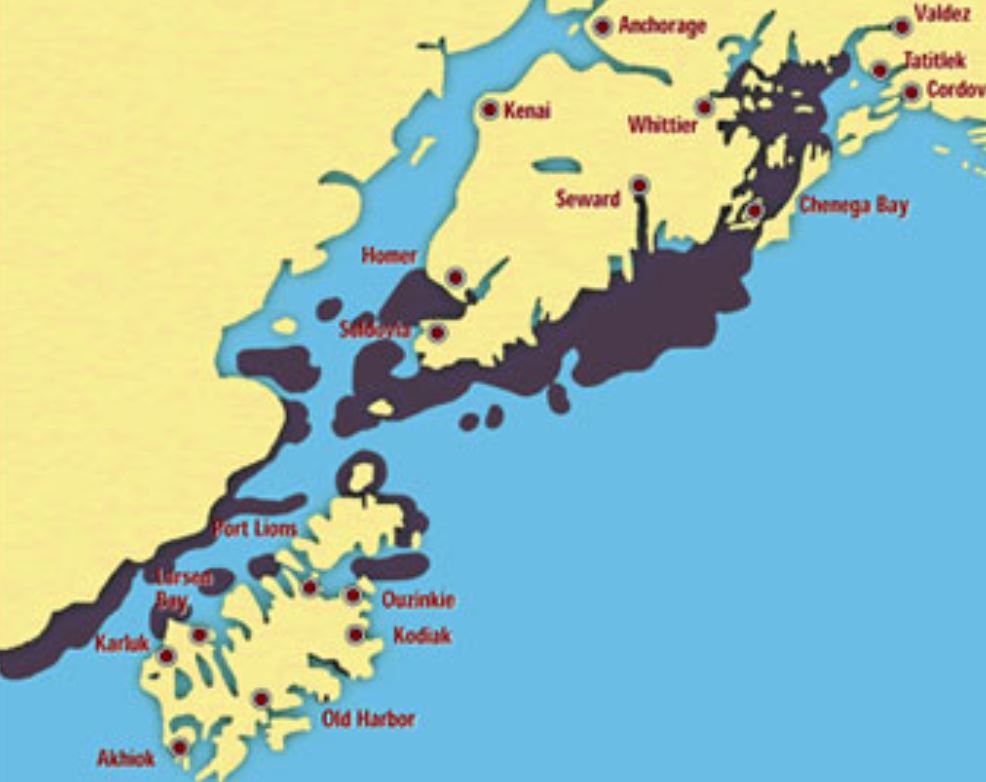
There were many tragic problems after the ship ran aground. There had never been an oil spill of this magnitude anywhere in the world so nobody knew what to do, in fact no one showed up for three days to start managing the oil leaking from the vessel. To make matters worse on the third day after the accident there was a terrible storm that severely hampered any effort to contain the leaking oil but the waves and wind spread the oil up and down the cost for hundreds of miles. Then if that wasn’t bad enough many of the techniques that were developed to clean up the oil where very detrimental to the ecosystem.
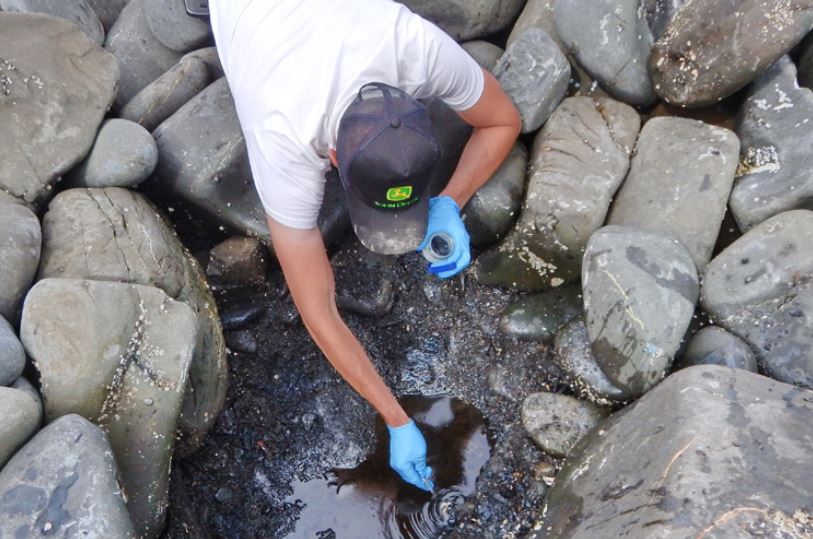
We watched a film in Kodiak that focused on the aftermath which showed the coastline looking somewhat pristine however if you dig down 12 inches the oil is still there and it sticks to your hands and tools just like it did 25 years ago. Valdez and Prince William Sound suffered irreparable damage to the economy and the ecosystem that will go on for decades. It is difficult not to focus on the Exxon Valdez tragedy.
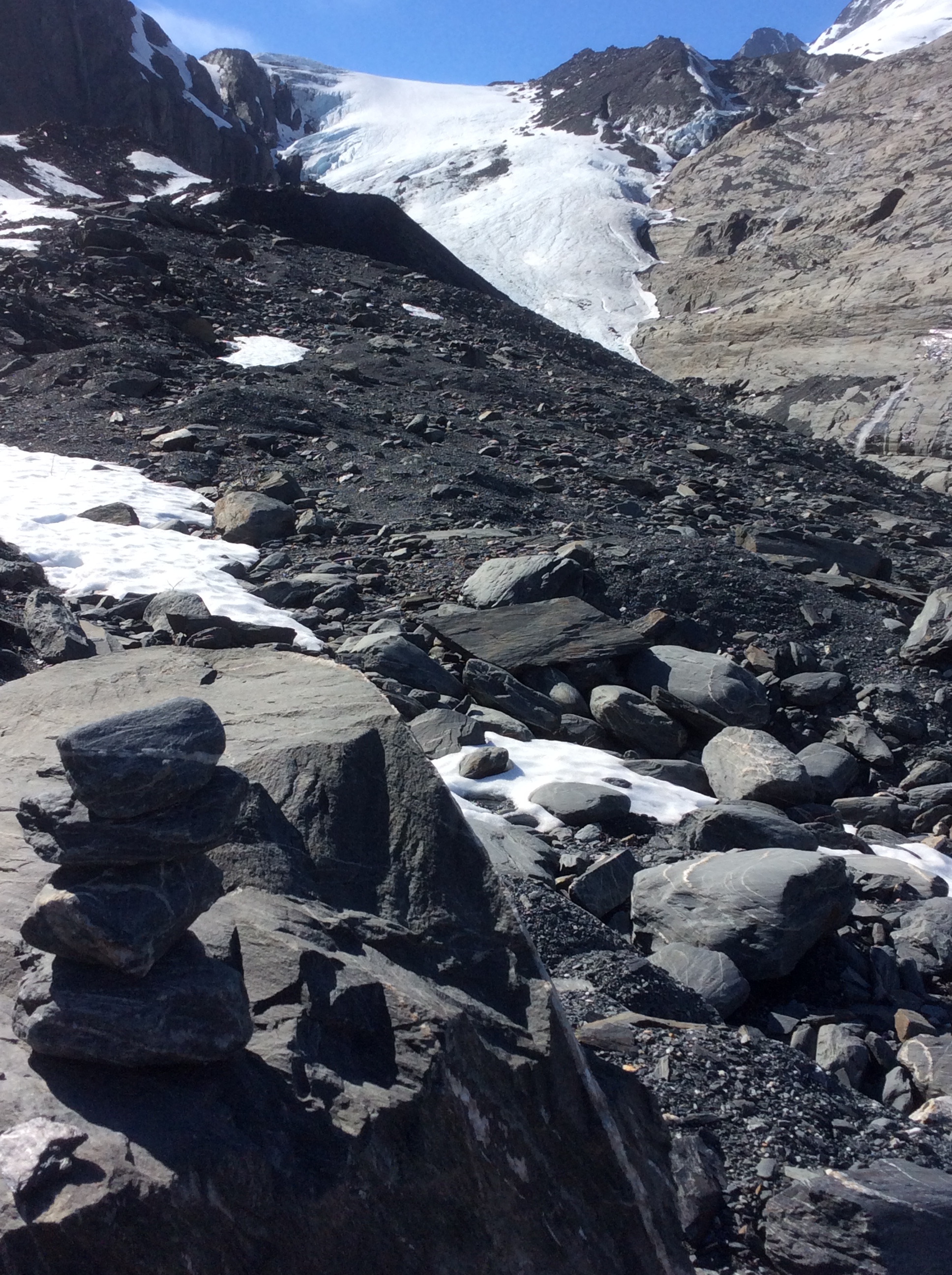
On our excursion in Valdez we took a bus tour to Thompson Pass and an opportunity to get up close and personal to the Worthington Glacier. The scenery on the bus ride was beyond description in is vastness and beauty. Snowcapped mountains no matter where you looked. Valdez is described as the Switzerland of Alaska. On the way to the pass we saw many waterfalls. When we reached the pass there was a parking lot for the buses so tourists could get out and take pictures of Worthington Glacier. We were very close to the glacier with a high bank of glacial moraine long the southern edge. Peter was satisfied taking pictures from the viewing platform until he spotted someone walking up the moraine toward the foot of the glacier. So he decided to climb up the moraine and get closer pictures also.

The bus was scheduled to leave at 1:40 and Peter was nowhere in sight. He’d walked up a trail on the moraine for 20 minutes and did not realize the time until 1:30. He starts running down the trail jumping over snow drifts and rock piles and made it to the bus 7 minutes late. When he walked on the bus everybody “boo’d” him as they had already voted to leave without him. JY was embarrassed to say the least.
On the way back to Valdez we stopped at Bridal Veil falls for a photo op.
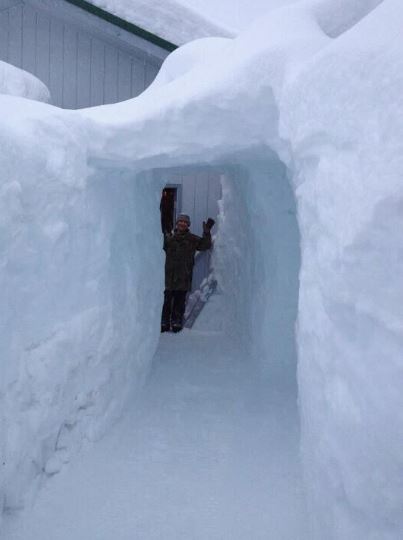
The bus drove around the town of Valdez and that part of the tour was over in about 15 minutes. Later that night we went to a presentation by a woman who grew up in Valdez after the earthquake and before the oil spill. Valdez gets an incredible amount of snow each year and she had pictures of a pathway to their front door that had vertical sides, was 2 feet wide and about 8 feet high.
Average yearly snowfall is 306 (25 feet) inches with a record of 560 inches (46 feet).
Tuesday June 4, 2019 – COLLEGE FJORD
Wednesday June 5, 2019 – HOMER
Homer Alaska is a larger town than Valdez with 3 stop lights and more retail stores. We took the free shuttle into town. We brought the computer and planned to go to the library to use their free WiFi to publish the next edition of the blog.
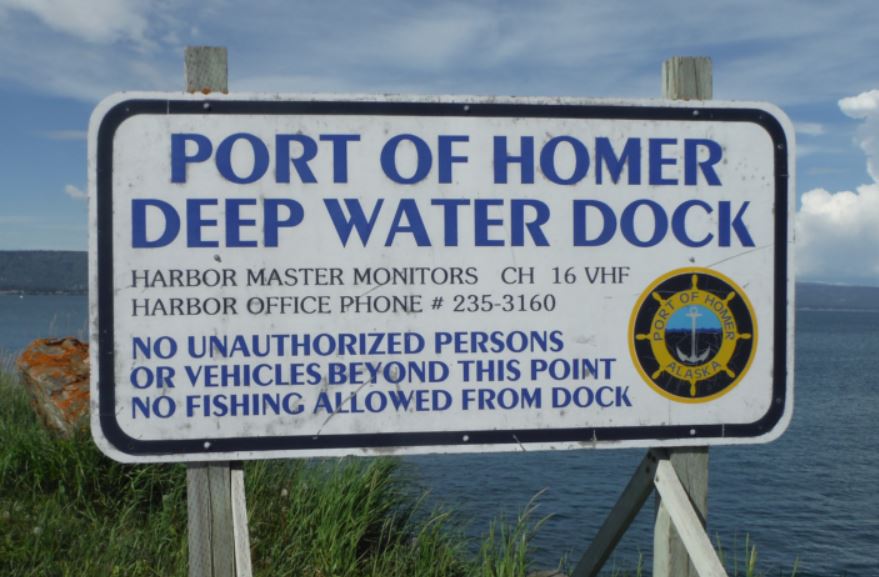
At the first stop there was a McDonald’s close by so we walked over there to use their free WiFi and drink senior coffee. We worked on the blog and managed to publish what we had up to that point.
There was some confusion with the time that our excursion was to start. The ticket said to meet at 2:15 and the excursion would start at 2:30. The cruise ship said there were problems with the excursion and there were different times announcements for the starting time. We were aware of this while at McDonald’s so when the original time to meet came
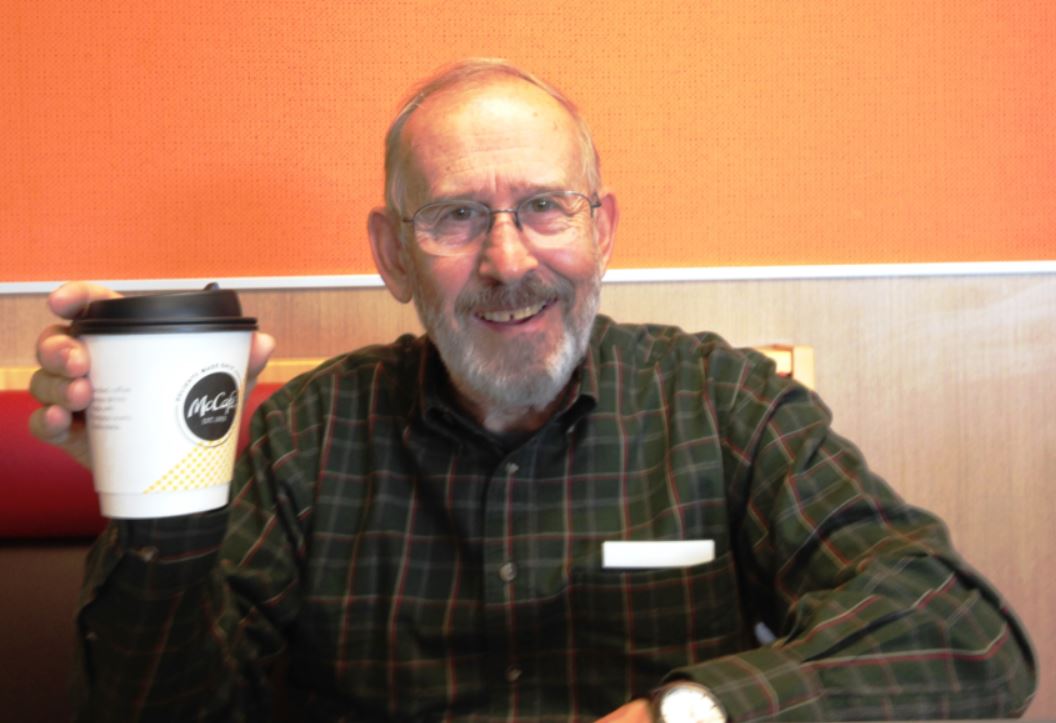
along we packed up and headed for shuttle pick up station #1.
The volunteers there showed us a text message that they had just received saying the excursion was going to start sooner than the original time indicated on the ticket. While we were sitting at the shuttle stop a moose and her calf walked through the parking lot right in front of us. We were so amazed by what we were seeing that there was no time to take a photo. Peter did not want to follow the moose into the woods as it’s dangerous to get close to a mother and her baby.
The two volunteers at the shuttle stop said there was no way we were going to catch the shuttle, make the next 3 shuttle stops and get to the theater on time for the show. We were then treated to some Alaskan hospitality.
The couple that were manning shuttle stop #1 cleaned out the back seat of their pick-up and said hop in and drove us to the theater. Consequently we were the first ones there and we thought the place was not open. After pounding on the door someone finally answered.
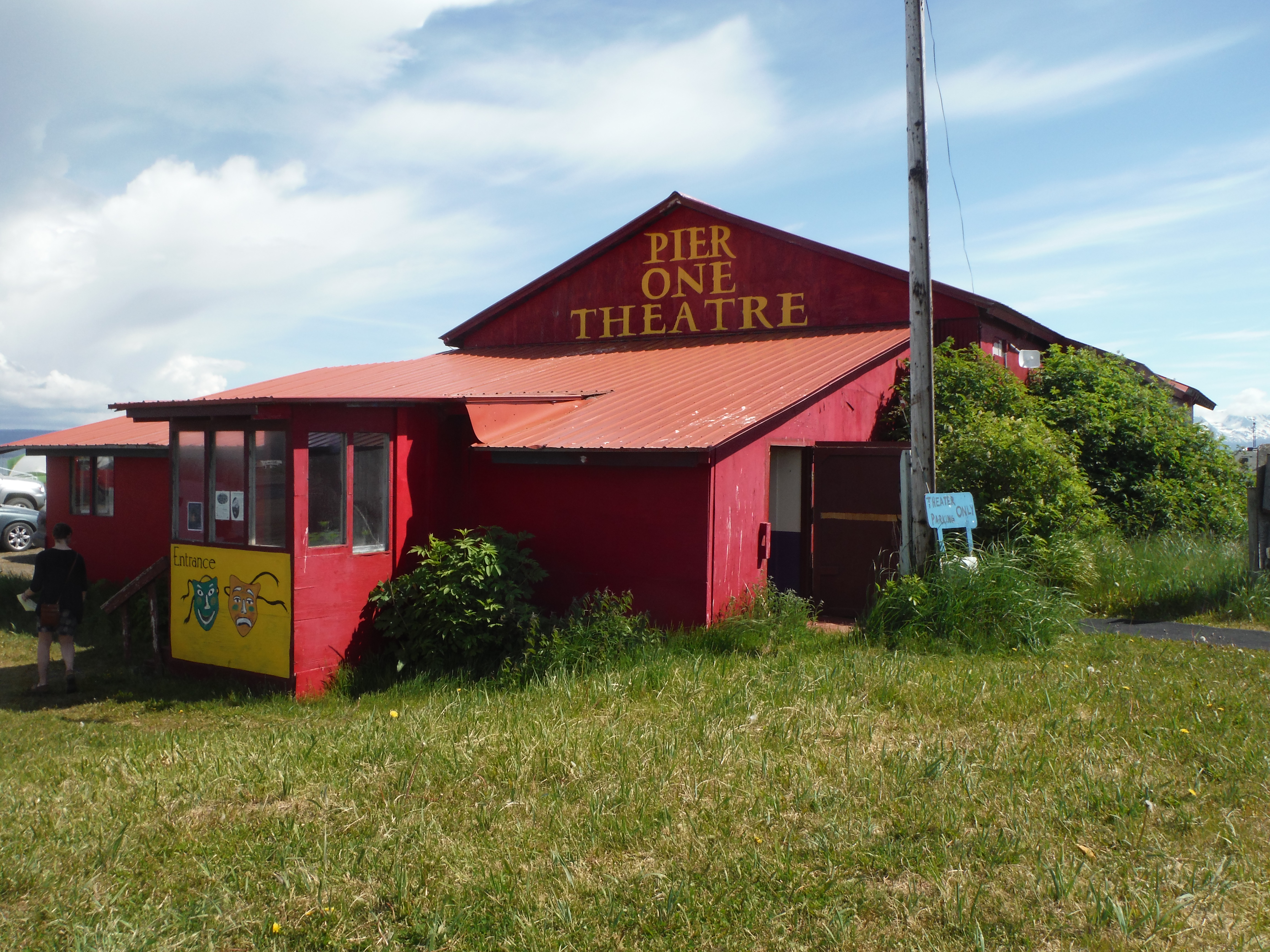
The man who runs the show (who is the show) looked out the door and asked “where’s the bus”? About 20 minutes later the bus arrived and the show went on!
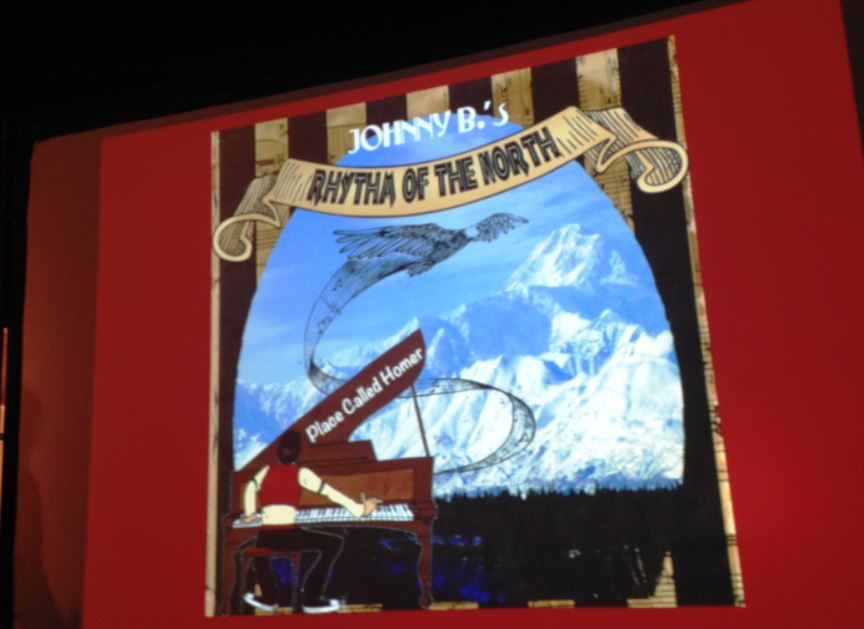
Although this appeared to be a small-town operation and a one man show, the production (Rhythm of the North) was extremely enjoyable. As we were early we were able to talk to the star of the show, Johnny B.
He is a classically trained pianist and heavily influenced by jazz, boogie-woogie and the environment and wildlife. His touring began in 1979 after graduating from the Berklee School of Music in Boston. He has lived in Alaska since 1981 when he met his wife in the potato salad line at the Talketna Moose Dropping Festival. He is a piano player par excellence.

The show consisted of music, beautiful photography, videos, stories and fun.
After the show we went to a well-known pub called the “Salty Dawg.” The Salty Dawg was a dive however almost everyone who goes in for a drink writes their name on a dollar bill and tacks it onto the wall or ceiling. As you can see in the photo there’s a lot of currency tacked to the walls and ceiling. All the money is considered a donation and at the end of the year they take it down and donate it. They told us that it is usually about $10,000 each year. The bank where they take it turns the money over to the Feds and they destroy it because it has been written on.


We shopped around a bit before heading back for the ship. The driver of the bus pointed out the “Time Bandit” which is one of the ships featured in the television series “The Deadliest Catch”. Peter walked to the dock for a picture with the ship. He ended up getting a tour of the ship and meeting the Captain and a photo with the owner. He was able to explore the whole ship.
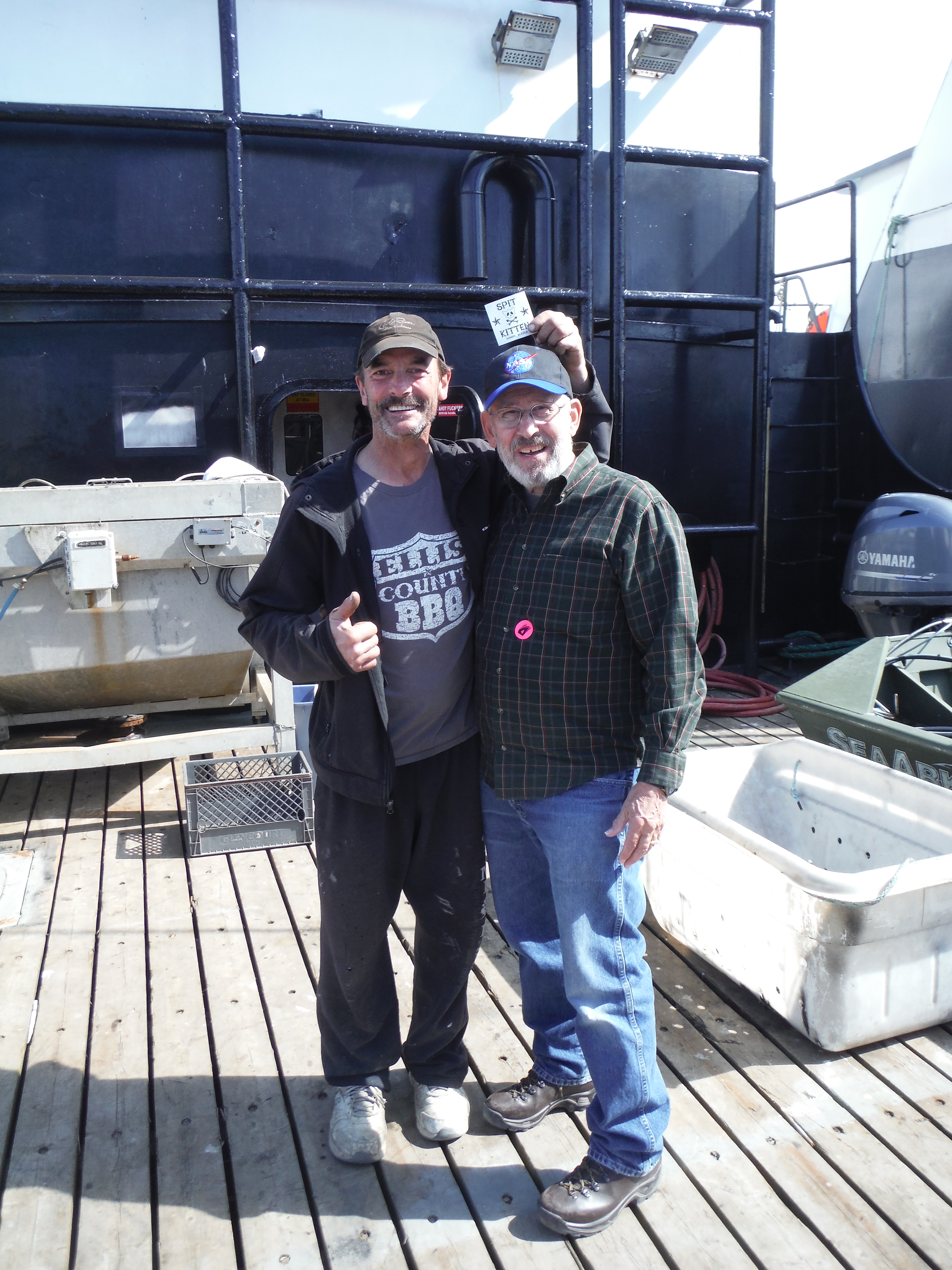
Consequently he got a realistic look at ship board life out at sea. Several of the crew were there sitting around the table drinking with their ladies and they were all talking like drunken sailors. Enough said!
Thursday June 6, 2019 – Anchorage
This morning we docked in Anchorage. It is the largest city in Alaska with approximately 40% of the entire population of the state. The weather has been abnormally nice according to most people we have talked to. This time of year it is usually overcast and/or rainy.

Our excursion today was 3.5 hours and included a narrated tour of downtown Anchorage where they have some department stores that we were surprised to see including Nordstrom’s. (We didn’t shop there.) Our shuttle bus continued to a 26 acre Alaska Native Heritage Center that exhibited the 11 major cultural groups of the state.
There were demonstrations of Native games that are included in the Olympics of native cultures from around the world above the Arctic Circle. They were events that we had never seen or heard of before, including the two foot kick. In this event there is a ball tied to a string that is dangling from a horizontal pole 10 feet in the air. The athlete stands back about 20 to 30 feet then runs up to where the ball is suspended, leaps up in the air, kicks the ball with BOTH feet and then lands on both feet without falling down. This may sound easy but requires a lot of agility. The record is 8 feet 8.5 inches and that record has been unbroken for 31 years. About a half dozen have reached 8 feet with the closest being 8 feet 5 inches.
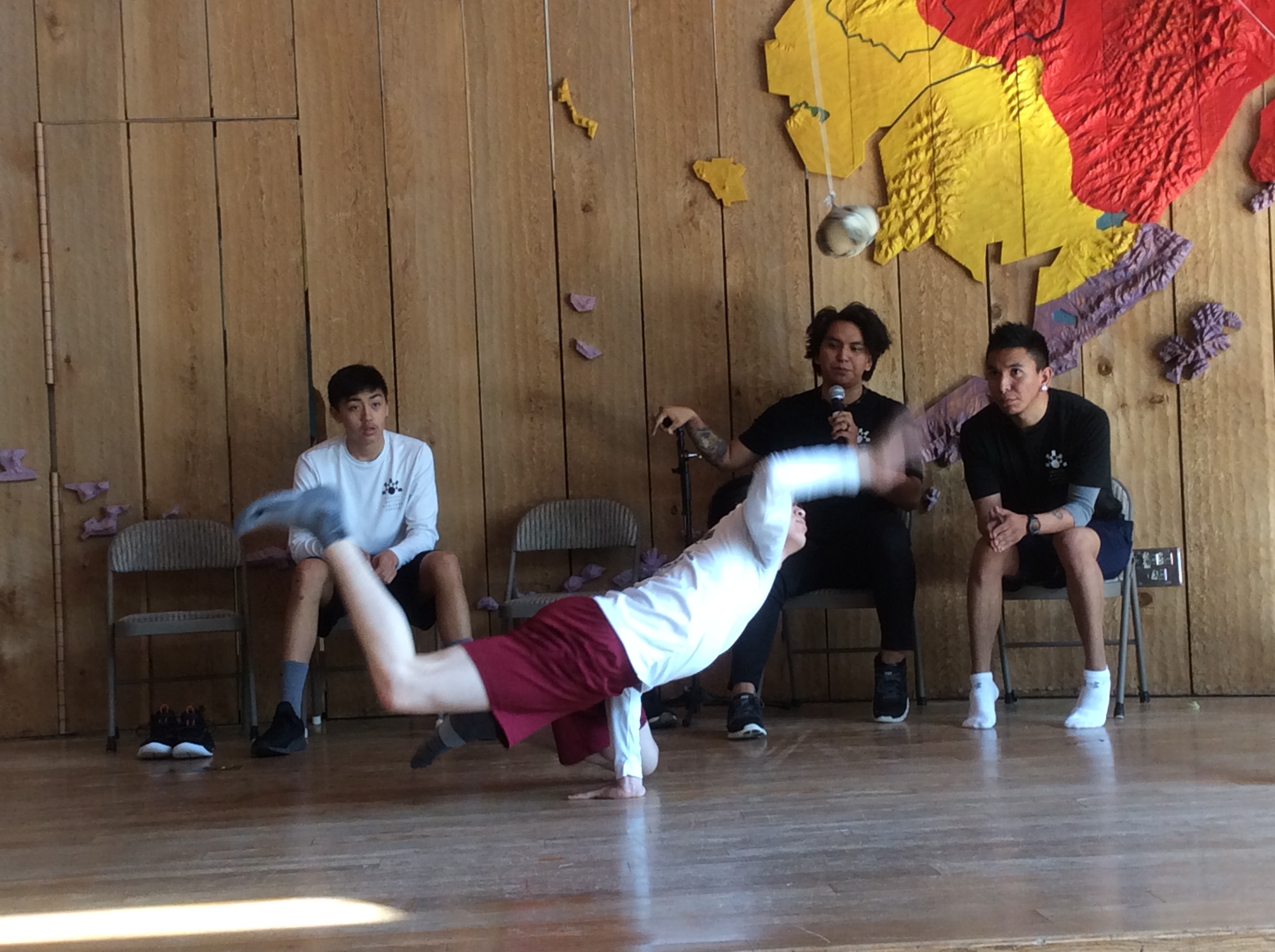
Another difficult event involved crouching on the floor, while the athlete balances his/her body on one hand then with the other hand reaches up and touches a ball over their head. Then after touching the ball they can’t let any part of their body touch the floor until they have exhibited stability while still balanced on that one hand. This is much harder than it looks and requires strength and balance.
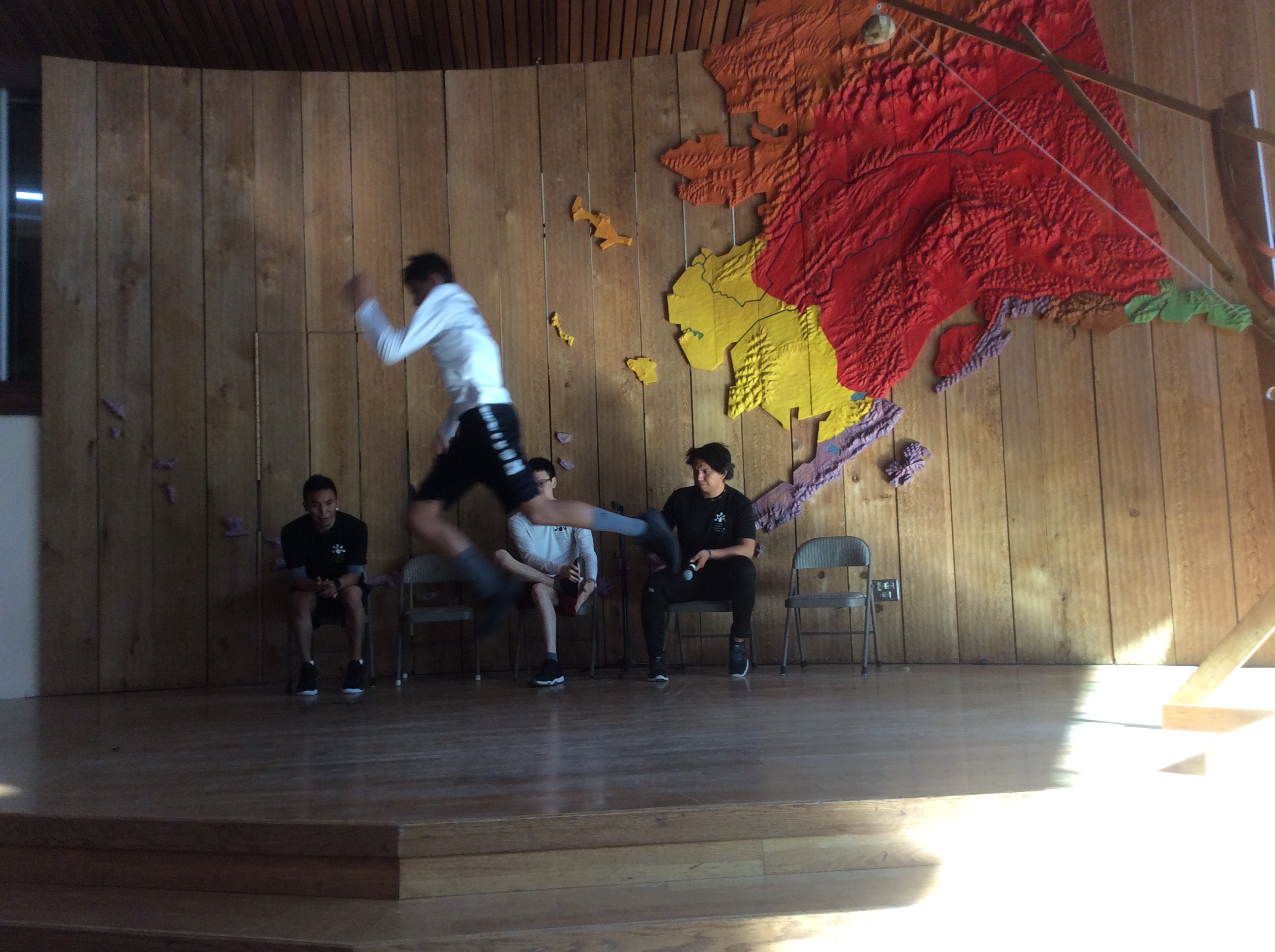
Other events involved a hop, 3 skips, and a long jump where they have to stick the landing on one foot. This event simulated hopping and skipping across floating pieces of ice in open waters. All the games are practiced to improve hunting skills on the ice. For example, shooting a seal requires stealth, balance on the ice and strength to pull a 400 lb. seal out of the water and drag it through the ice back to the village. It’s important not to slip on the ice and fall in the freezing water as there is no one to rescue a lone hunter.
there was a video showing the native Olympics with teams from Russia, Canada, Norway, Finland and Greenland. Although this is truly Native Olympics with many events requiring power, balance, agility and focus the vast majority are directly related to the ability to survive in the extremely harsh environment of the arctic.
The next demonstration was of native dancing. During the 82 dark days of winter villagers gather at someone’s small lodging around a fire, share a meal, tell stories about their ancestry, sing songs and dance. The houses are small so there is less to heat and most of the interpretive dancing involves foot and arm movements in one spot as there is not much room to dance with people sitting on the floor.

After the shuttle dropped us off at the rendezvous point in downtown Anchorage we spent some time exploring. As it was lunchtime, we decided to try highly recommended restaurant for fish and chips and beer.
Friday June 7, 2019 – KODIAK
Kodiak Island is where we spent the day. It is a nice little town that thrives mostly on fishing and tourism. This year 12 ships are scheduled to dock in Kodiak however next year there are 31 ships scheduled to dock here. After driving around Kodiak it does not appear that the infrastructure can weather the wear and tear of 31 cruise ships with an estimated head count of 37,200 passengers coming ashore in a 4 month period.

Our excursion was Kodiak Highlights. From the dock we drove into town which has a population of 6,000. The bear population of 3,000 is half the people population. There are only 100 miles of paved roads on the island so there’s not much scenic touring to do on the island.
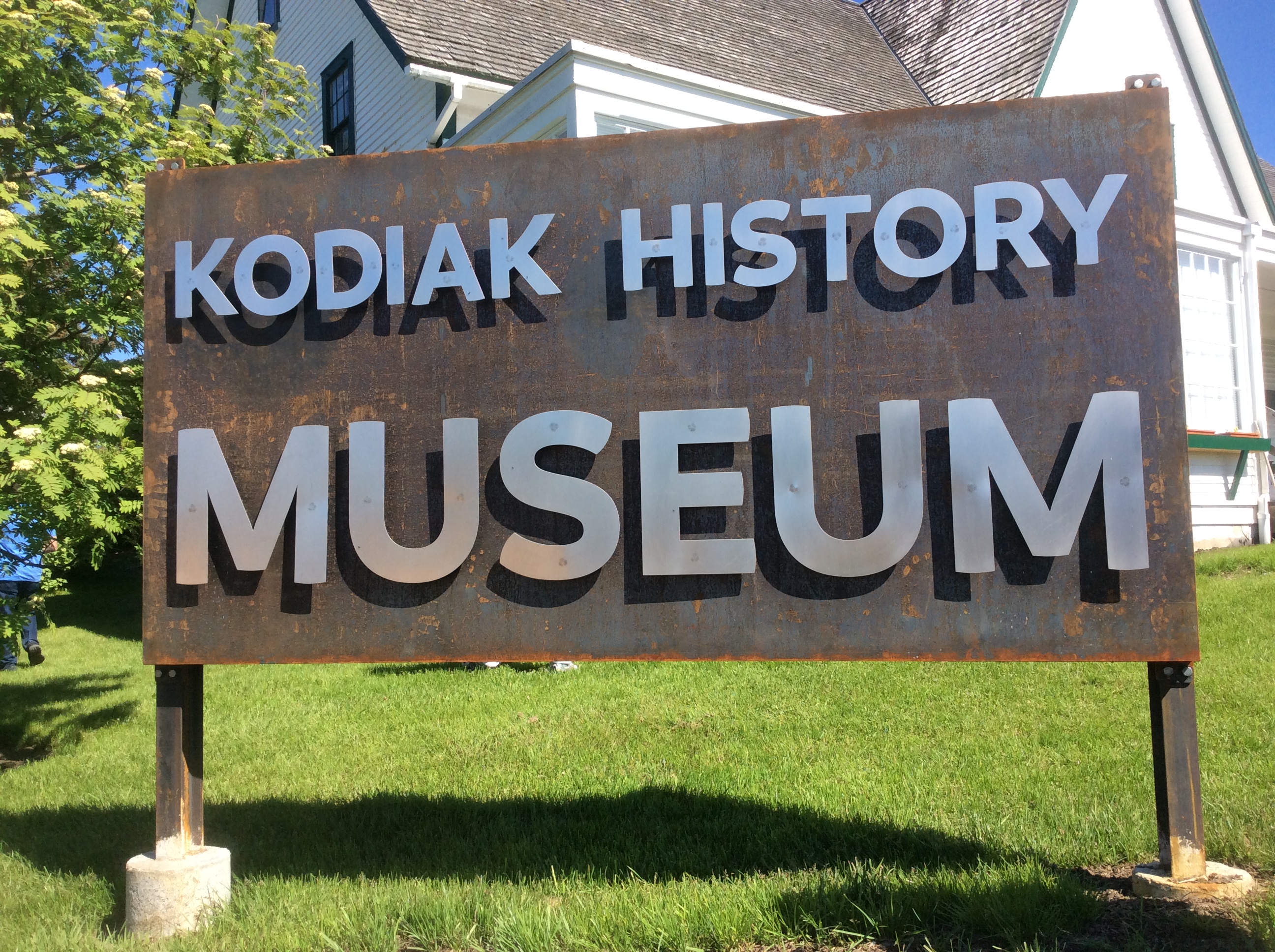
Our first stop was the Baranov History Museum where there is a mix of Native, Russian and American historical artifacts. It is a small museum with an amazingly large number of pieces on display. The history of Kodiak and all of Alaska has been determined by the impact of earthquakes, military presence, Russian influence and history, along with the rich influence of the five main tribes of Alaska, Tlingit in particular. And “Sewards’s Folly” – the purchase of Alaska, was considered a foolish waste of money. However for a multitude of reasons this did not turn out to be the case as the true value of Alaska quickly became an asset to America.
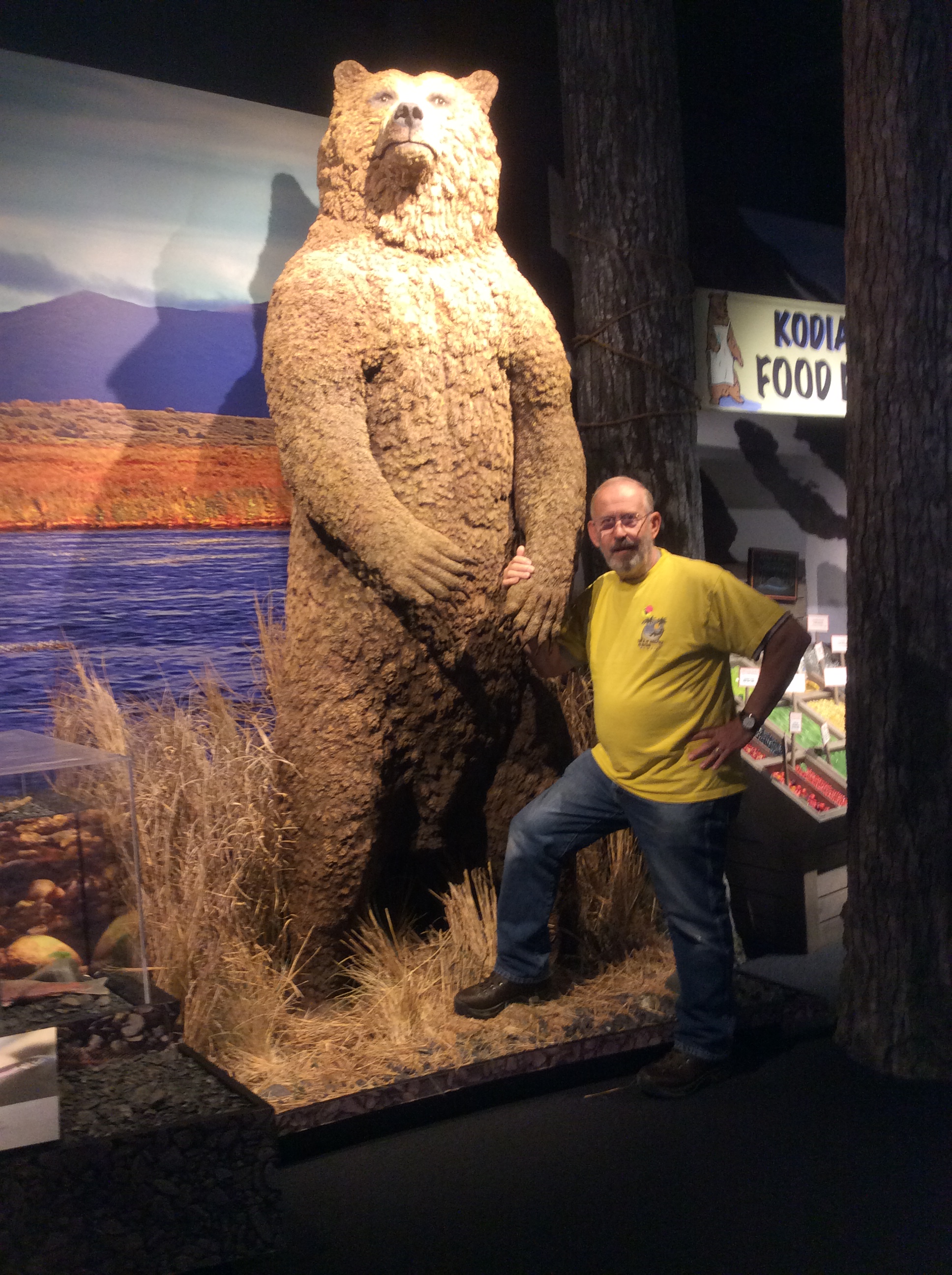
Next we visited the Kodiak National Wildlife Refuge Visitor Center. The center exhibited a collection of Native artifacts and an assortment of wildlife dioramas. There was a replica of one of the largest Kodiak bears ever taken by a hunter at the center and it was huge. If you met a bear like this in the wilderness you’d be toast before you could say “HOLY S**T”.
Our next stop was the Alutiiq Museum. This museum offered a more in-depth look at the Alaskan Native Culture and provided a very detailed collection of artifacts like clothes, weapons, cookware and musical instruments.
There were detailed explanations of how the items were made and used. You can walk through these museums and see everything but it would take days to read all the descriptions, review the literature and watch the videos. We each read what was of interest to ourselves but soon it was time for the shuttle to leave.


Our tour ended at Fort Abercrombie State Park, a WW II Historical site. There were a few bunkers on the site. The main bunker had been converted into a museum displaying hundreds of objects from the WW II. Leftover weapons and munitions had been destroyed on this strategic military island so we were free to roam around the site.

The view looking out over the ocean was breathtaking.
In town we walked to a gift shop and stopped in at a Wells Fargo bank where there was a Kodiak bear mounted in the office area. As you can see next to JY it is huge.

 North By Northwest
I’m so excited to finally see the blog. Thank you Dan very much. Your commentary is very well done & the detail is amazing. Loving the pictures which are just gorgeous. It was 105 degrees today so very refreshing in contrast to the desert summer.
LikeLike
Looks like you are having a great time. The historical aspects are fascinating. I look forward to hearing more.
Annette
LikeLike